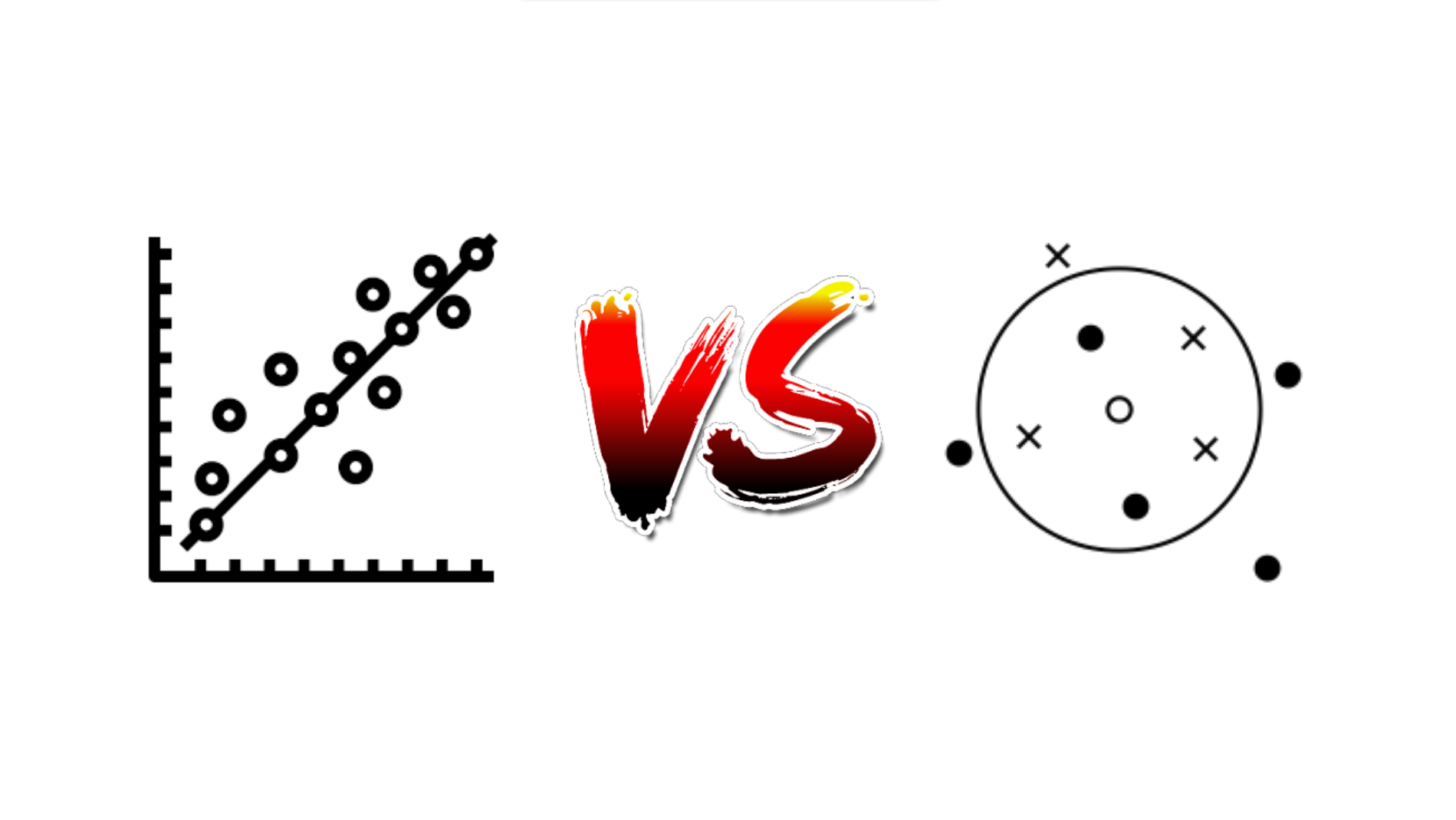
Parametric and Non-Parametric Machine Learning Models
Parametric and non-parametric machine learning models differ in their approach to modeling data and making predictions.
Parametric Models
A parametric model is a type of learning model that characterizes data using a fixed number of parameters, which does not vary regardless of the volume of training data. Essentially, the quantity of data inputted into a parametric model does not influence its determination of the number of parameters required. As some features of a parametric model we have these:
- Fixed Number of Parameters: These models, once trained, have a fixed number of parameters, regardless of the size of the data. Examples include linear regression, logistic regression, and neural networks.
- Assumptions about Data Distribution: Parametric models often make strong assumptions about the form of the data distribution (e.g., data is normally distributed).
- Simplicity and Speed: Generally simpler and faster to train, as they have a predetermined form.
- Risk of Underfitting: Due to their simplicity and fixed structure, they may not capture the complexity of the data well, leading to underfitting.
- Easier to Interpret: Models like linear regression are often more interpretable because of their fixed structure.
Advantages of Parametric Machine Learning Algorithms:
- Ease of Understanding: Parametric models are generally more straightforward, making the interpretation of results simpler.
- Efficiency: They learn quickly from data, offering high-speed performance.
- Data Efficiency: These algorithms require less training data and can still perform adequately even if the fit isn’t perfectly aligned with the data.
Disadvantages of Parametric Machine Learning Algorithms:
- Restrictiveness: By adhering to a predefined functional form, these methods are significantly limited to that specific structure.
- Simplicity in Complexity Handling: They are better suited for less complex problems due to their inherent simplicity.
- Potential for Inaccuracy: It’s often challenging for these methods to accurately replicate the underlying mapping function, which can lead to suboptimal performance.
Examples of Parametric Models
- Linear Regression: A model that assumes a linear relationship between input variables and the target variable.
- Logistic Regression: Used for binary classification, it models the probability of a binary outcome based on input variables.
- Naive Bayes: Based on Bayes’ Theorem, it assumes independence between predictors and is often used in text classification.
- Perceptron: A simple type of neural network, suitable for linearly separable datasets. Simple Neural Networks are part of this group as well.
- Support Vector Machines (SVM): When used with a linear kernel, SVMs are parametric and are effective for both classification and regression tasks.
Non-Parametric Models
Nonparametric machine learning algorithms are defined by their lack of rigid assumptions regarding the structure of the mapping function. This absence of preconceived notions allows them to flexibly adapt and learn any form of function directly from the training data. As some features of a non-parametric model we have these:
- Flexible Number of Parameters: The complexity of these models can grow with the size of the data. Examples include decision trees, k-nearest neighbors (KNN), and kernel methods.
- Fewer Assumptions on Data Structure: They make fewer assumptions about the data distribution, allowing them to adapt to the data’s actual structure.
- Complexity and Computational Cost: Often more complex and computationally expensive, especially with large datasets.
- Risk of Overfitting: Their flexibility can lead to overfitting, especially if not regularized or if the dataset is small.
- Less Interpretability: These models, particularly advanced ones like random forests, can be less interpretable due to their complexity.
Advantages of Nonparametric Machine Learning Algorithms:
- Versatility: They can adapt to various functional forms, making them highly versatile.
- Robustness: These algorithms typically operate with few or no assumptions about the underlying function.
- Enhanced Performance: Often, they are capable of producing more accurate models for prediction purposes.
Disadvantages of Nonparametric Machine Learning Algorithms:
- Increased Data Requirement: They necessitate significantly more training data to accurately estimate the mapping function.
- Reduced Speed: Training these models is generally slower due to a greater number of parameters that need adjusting.
- Risk of Overfitting: There’s a higher chance of overfitting the training data, and it can be challenging to elucidate the rationale behind specific predictions.
Examples of Non-Parametric Models
- K-Nearest Neighbors (KNN): A simple, instance-based learning algorithm that stores all available cases and classifies new cases based on similarity measures.
- Decision Trees: A model that represents decisions and decision making in a tree-like model of choices and their possible consequences.
- Random Forest: An ensemble of decision trees, usually trained with the “bagging” method to improve accuracy and control over-fitting.
- Kernel SVM: When using non-linear kernels, SVM becomes non-parametric, capable of handling complex datasets.
Key Differences
- Flexibility: Non-parametric models are more flexible as they can adapt to the data’s underlying structure.
- Assumptions: Parametric models rely on predefined assumptions about data distribution, whereas non-parametric models do not.
- Complexity vs. Simplicity: Non-parametric models can become very complex, adapting to large and intricate datasets, while parametric models maintain simplicity and speed but might not capture complex patterns as effectively.
- Risk of Overfitting vs. Underfitting: Non-parametric models are more prone to overfitting, while parametric models are more likely to underfit, especially in the presence of complex data patterns.
In summary, the choice between parametric and non-parametric models depends on the dataset’s characteristics, the problem’s complexity, and the balance between model interpretability, flexibility, and computational efficiency.